

whatsapp
5.0
Based on 45 reviews

1099 Forms & Reporting Guide

Businesses and other payers use Form 1099 information returns to report many different types of payments, income, distributions, and transactions. Determining which form applies—and understanding when, how, and where it must be filed—can become complicated as reporting requirements vary by payment type, recipient, filing method, and tax year.

The 1099FIRE 1099 Forms & Reporting Guide brings together practical resources for businesses, accounting professionals, tax practitioners, and other organizations responsible for preparing and filing 1099 information returns.

Use this hub to find guidance on:

✅  Choosing the appropriate 1099 form for a payment or transaction
✅  Understanding payer filing and recipient reporting requirements​
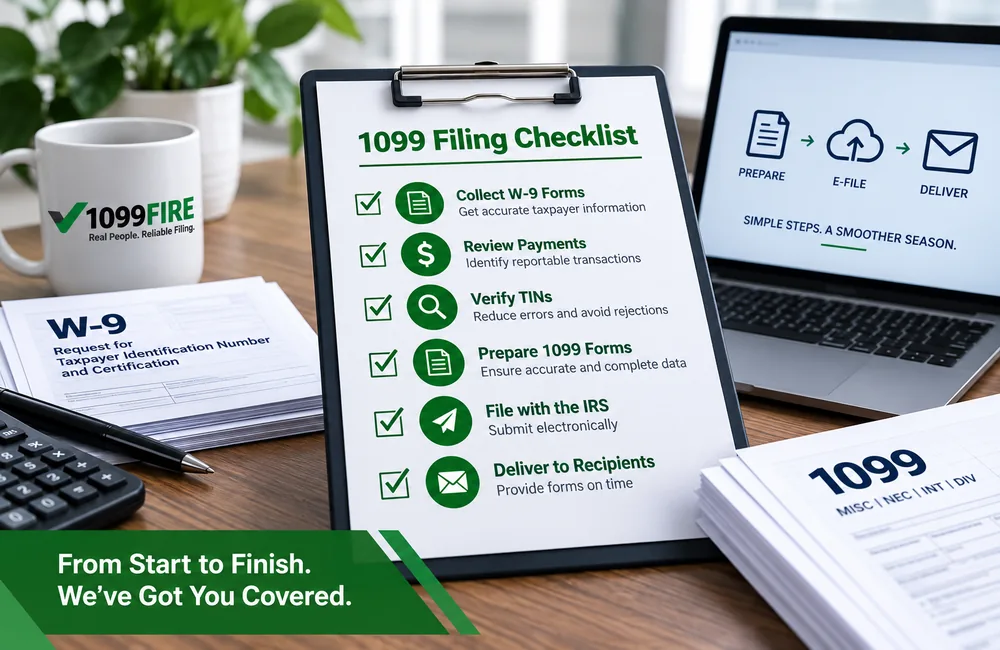
✅  Preparing and electronically filing 1099 forms
✅  Correcting inaccurate or previously filed information returns
✅   Managing W-9, TIN, and recipient information
✅  Navigating state and federal reporting requirements

1099fire logo icon overtop of laptop with overlaid text '1099 Forms & Reporting'

Explore 1099 Filing & Reporting Topics

The resources below cover the most common stages of 1099 reporting, from choosing the correct form and preparing recipient information to filing, correcting errors, and meeting state and federal requirements. Use these topic areas to quickly find guidance based on the specific filing question or compliance issue you are working through.

Choosing the Right 1099 Form

The correct information return depends on what was paid or reported, who received it, the nature of the transaction, and in some cases, how the payment was made.

Our form-selection resources help businesses distinguish between commonly confused forms, understand which types of payments may be reportable, and determine which 1099 form best fits a particular filing situation. Businesses paying contractors by check, ACH, credit card, payment app, or online marketplace can also review our 1099-NEC vs. 1099-K guide to understand which reporting framework applies.

Filing Requirements & Deadlines

Different 1099 forms can have different filing requirements, recipient statement rules, and deadlines. Filing obligations may also change depending on the number and types of information returns an organization prepares.

Explore guidance covering who must file, when information returns are due, recipient statement requirements, filing extensions, prior-year returns, and other filing responsibilities.

Electronic Filing & IRS IRIS

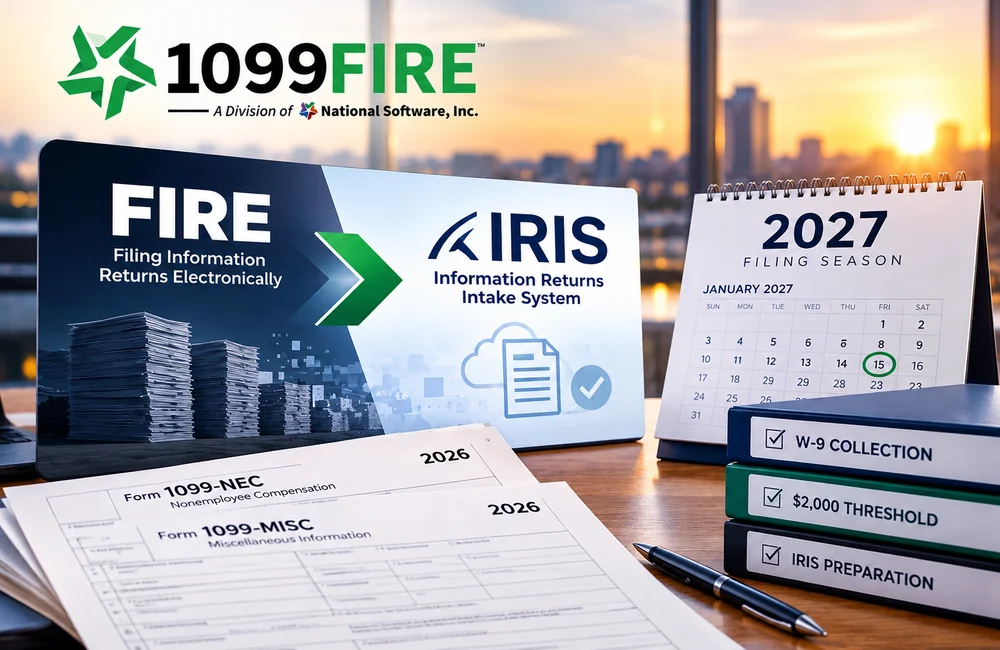
Most information returns can be submitted electronically through the IRS Information Returns Intake System (IRIS), either through the IRS Taxpayer Portal or Application-to-Application transmission.

Our e-filing resources explain filing methods, system requirements, Transmitter Control Codes, submission workflows, and the transition from the legacy FIRE system to IRIS.

Businesses filing Form 1099-MISC for tax year 2026 can review our Form 1099-MISC FIRE-to-IRIS guide for the specific file-format, TCC, and workflow changes that apply to the 2027 filing season.

1099 Corrections & Filing Errors

Incorrect names, taxpayer identification numbers, payment amounts, form types, and other reporting errors may require a corrected information return.

Learn how different types of 1099 errors are handled, what to do when an error is discovered after filing, and how late or inaccurate information returns can affect filing obligations.

W-9, TIN Matching & Backup Withholding

Accurate payer and recipient information is critical to successful 1099 reporting.

Explore resources covering Form W-9 collection, IRS TIN Matching, legal names and DBA names, taxpayer identification number mismatches, B-notices, CP2100 notices, backup withholding, and other data-quality issues that can lead to filing errors.

State 1099 Filing Requirements

Filing a 1099 with the IRS does not necessarily satisfy every state reporting obligation.

State requirements can vary based on the type of form, payment, withholding, recipient location, and whether a state participates in federal/state filing programs. Our state filing resources help businesses understand direct state submissions, the Combined Federal/State Filing Program, state deadlines, corrections, and multi-state reporting situations.

Common 1099 Forms

The Form 1099 family includes numerous information returns designed for different types of payments and transactions. Some of the most commonly encountered forms include:

Form 1099-NEC

Form 1099-NEC is used to report certain types of nonemployee compensation and is commonly associated with payments made to independent contractors and service providers.

Form 1099-MISC

Form 1099-MISC is used for several types of miscellaneous payments and reporting situations that are not reported as nonemployee compensation on Form 1099-NEC.

Form 1099-K

Form 1099-K is used to report certain payment card and third-party network transactions. Reporting rules and thresholds can change, making current filing guidance especially important for payment processors, platforms, businesses, and recipients.

Forms 1099-INT & 1099-DIV

Forms 1099-INT and 1099-DIV are commonly used by banks, financial institutions, investment firms, and other payers to report interest income, dividends, and certain distributions.

Form 1099-R

Form 1099-R reports distributions from pensions, annuities, retirement plans, IRAs, and certain other retirement arrangements.

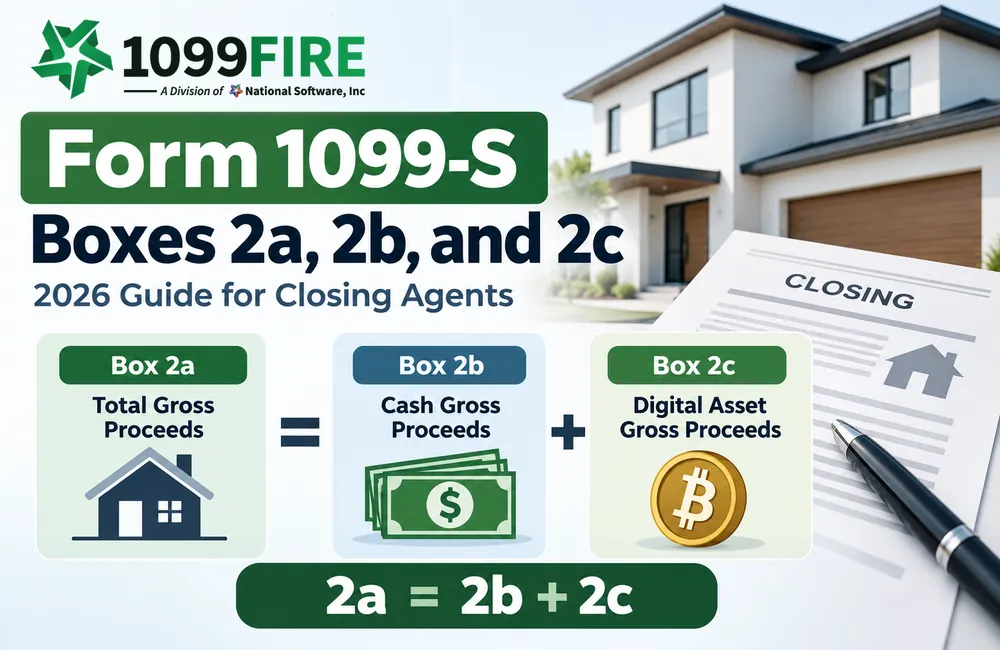
Form 1099-S

Form 1099-S is used to report proceeds from certain real estate transactions and can create reporting responsibilities for settlement agents and other parties involved in a transaction.

Other 1099 Forms

Additional forms address transactions such as securities sales, cancellation of debt, digital assets, health savings accounts, education savings distributions, cooperative distributions, life insurance transactions, and other specialized reporting situations.

Featured 1099 Guides & Resources

Explore our latest and most useful resources covering 1099 filing, form selection, reporting requirements, electronic filing, corrections, and payer compliance.

1099 Forms, Templates & Filing Tools

Need a form, sample file, import template, or other preparation resource?

Visit our Forms, Templates & Filing Tools library to find downloadable resources for preparing and working with 1099 information returns.

Frequently Asked Questions About 1099 Reporting

Which 1099 form should a business use?

The appropriate form depends on the type of payment or transaction being reported and the recipient involved. For example, nonemployee compensation may require Form 1099-NEC, while other payments may fall under Form 1099-MISC or another specialized 1099 form. Businesses should review the requirements for the specific payment before filing.

No. Whether a payment must be reported depends on several factors, including the payment type, recipient, reporting threshold, business relationship, and tax year. Certain payments and recipients may also qualify for exceptions.

Yes. The IRS supports electronic filing for most information returns through the Information Returns Intake System (IRIS). The filing method that makes the most sense can depend on filing volume, technical capabilities, and whether the organization files directly or uses a filing provider.

The appropriate correction depends on the type of error. Incorrect taxpayer information, payment amounts, form types, or other data may require different correction procedures. Review the specific correction requirements before submitting another return.

Some states have information-reporting requirements in addition to federal filing. Requirements vary by state and may involve direct filing, state withholding information, separate deadlines, or participation in the Combined Federal/State Filing Program.

Need Help With 1099 Filing?

Managing multiple forms, recipients, filing requirements, corrections, and state obligations can become time-consuming—especially for businesses preparing large numbers of information returns.

1099FIRE can help organizations prepare and submit information returns, address corrections and prior-year filings, and manage other 1099 reporting requirements.

Scroll to Top