



Tax Law & Reporting Updates Guide
Information-reporting requirements can change from one filing season to the next. New legislation, revised IRS forms, filing thresholds, electronic filing systems, deadlines, and reporting procedures can all affect how businesses prepare and submit information returns.
The 1099FIRE Tax Law & Reporting Updates Guide brings together important developments affecting businesses, accounting professionals, payroll teams, tax practitioners, and other organizations responsible for information-return compliance.
Use this hub to stay current on:
✅ Changes to 1099 reporting thresholds
✅ New and revised IRS information returns
✅ Updates to Forms 1099-NEC and 1099-MISC
✅ Changes to IRS electronic filing systems
✅ FIRE retirement and the transition to IRIS
✅ Electronic filing requirements and thresholds
✅ New reporting fields and data requirements
✅ Filing deadline and penalty changes
✅ State information-reporting developments
✅ Other regulatory changes affecting information-return filers

Explore Tax Law & Information Reporting Updates
Not every tax-law change affects information reporting. The resources in this section focus on developments that change what businesses must report, which forms they use, when returns are due, how they submit information, or what data they must collect before filing.
Use the topics below to follow significant information-reporting developments and understand how they may affect your filing process.
1099 Reporting Threshold Changes
Reporting thresholds determine when certain payments may trigger information-return filing requirements.
Changes to these thresholds can affect which vendors and recipients require Forms 1099, how businesses monitor payments throughout the year, and how year-end filing populations are determined.
Our 1099 reporting threshold updates explain new statutory thresholds, effective dates, inflation adjustments, and what businesses should consider when applying the rules.
Form 1099-NEC & 1099-MISC Changes
Changes to Forms 1099-NEC and 1099-MISC can affect both the information businesses collect and the data that ultimately appears on the return.
For tax year 2026, changes include a higher reporting threshold for certain payments and new reporting fields related to cash tips, tipped occupations, and qualified overtime compensation.
Our Form 1099-NEC and 1099-MISC updates explain what changed and what filers need to prepare differently.
FIRE Retirement & IRIS Transition
The IRS is retiring the Filing Information Returns Electronically system and moving information-return intake to IRIS.
This transition affects organizations that historically relied on FIRE TCCs, FIRE-compatible software, or established FIRE transmission workflows.
Our FIRE retirement and IRIS transition resources explain key dates, credential changes, filing-system differences, and steps existing FIRE users should take before the 2027 filing season.
Electronic Filing Requirement Changes
Legislation, regulations, and IRS administrative guidance can change electronic filing requirements.
Businesses should understand how the 10-return aggregate electronic filing threshold works and how the IRS combines return types when determining whether electronic filing is required.
Our resources track changes that affect when businesses must file electronically and which system accepts the applicable return.
New & Revised Information Returns
The IRS periodically introduces new information returns or substantially revises existing forms in response to legislative and regulatory changes.
Our new and revised information return guidance covers forms that create new payer responsibilities, reporting fields, data-collection requirements, or filing workflows.
Recent examples include the introduction of Form 1098-VLI and revisions affecting 2026 Forms 1099-NEC and 1099-MISC.
Filing Deadline & Penalty Updates
Information-return deadlines, penalty amounts, and correction rules can change over time.
Our filing deadline and penalty updates help businesses identify changes affecting late filings, incorrect information returns, recipient statements, extensions, and other compliance obligations.
State Information Reporting Changes
State information-reporting requirements also evolve as states revise filing thresholds, direct-submission requirements, electronic filing systems, healthcare reporting rules, and withholding procedures.
Our state information-reporting updates highlight developments that materially affect businesses filing information returns across multiple jurisdictions.
Key Information Reporting Changes for 2026
Tax year 2026 includes several significant developments for information-return filers. For a broader overview of the filing-system, threshold, and preparation changes affecting the 2027 filing season, see our 2026 Form 1099 Filing Changes: What Businesses Need to Know Before 2027 guide.
New $2,000 Reporting Threshold
For tax years beginning after 2025, the threshold for certain information-reporting requirements increases from $600 to $2,000.
The change affects certain payments reported on Forms 1099-NEC and 1099-MISC and may also affect related backup withholding rules.
Businesses should still track payments throughout the year so they can determine whether individual recipients cross the applicable reporting threshold.
New 1099-NEC & 1099-MISC Reporting Fields
Forms 1099-NEC and 1099-MISC include new fields for 2026 related to:
- Cash tips
- Treasury Tipped Occupation Codes
- Qualified overtime compensation
- Other revised reporting information
These changes may require businesses and software providers to collect additional data before year-end filing.
FIRE Retirement
The IRS is retiring FIRE as part of the transition to IRIS.
Existing FIRE users should review the transition requirements before the 2027 filing season, including IRIS TCC applications, filing methods, software readiness, and changes to prior-year and correction workflows.
Preparing for a New Filing Season
Businesses should not wait until forms are due to evaluate reporting changes.
Before each filing season, review:
- Current-year information-return instructions
- Reporting thresholds
- Changes to form fields
- Electronic filing requirements
- IRS system changes
- Filing credentials and TCC requirements
- Recipient-data requirements
- Federal and state filing deadlines
- Penalty and correction procedures
- Internal accounting and payroll data needed for new reporting fields
A formal year-end review can help identify new requirements before filing begins and reduce last-minute changes to payroll, accounts payable, and filing workflows.
Featured Tax Law & Reporting Updates
Explore recent developments affecting 1099 filing, information-return thresholds, IRS filing systems, form requirements, deadlines, and compliance procedures.
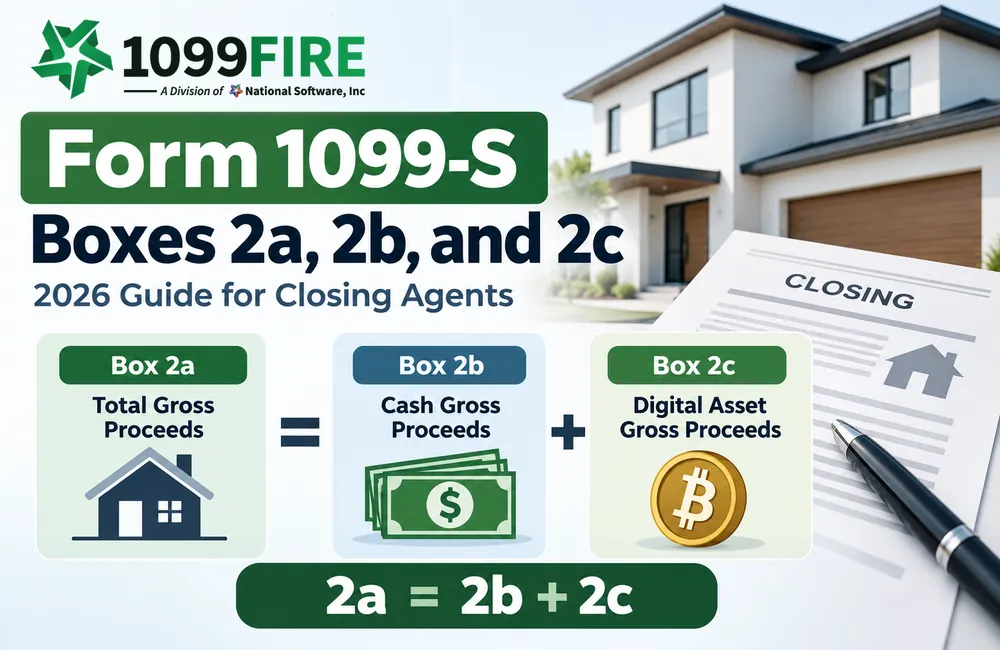
Form 1099-S Boxes 2a, 2b, and 2c: 2026 Guide for Closing Agents
The 2026 Form 1099-S splits gross proceeds into three boxes. Box 2a is the total, box 2b is the cash portion and box 2c is
2026 Form 1099 Box Changes: New Fields, Renumbered Boxes, and Data Preparation
Tax year 2026 brings changes to several Form 1099 boxes and reporting fields. Learn what’s changing, how to prepare your data, and how outsourced filing can simplify compliance.
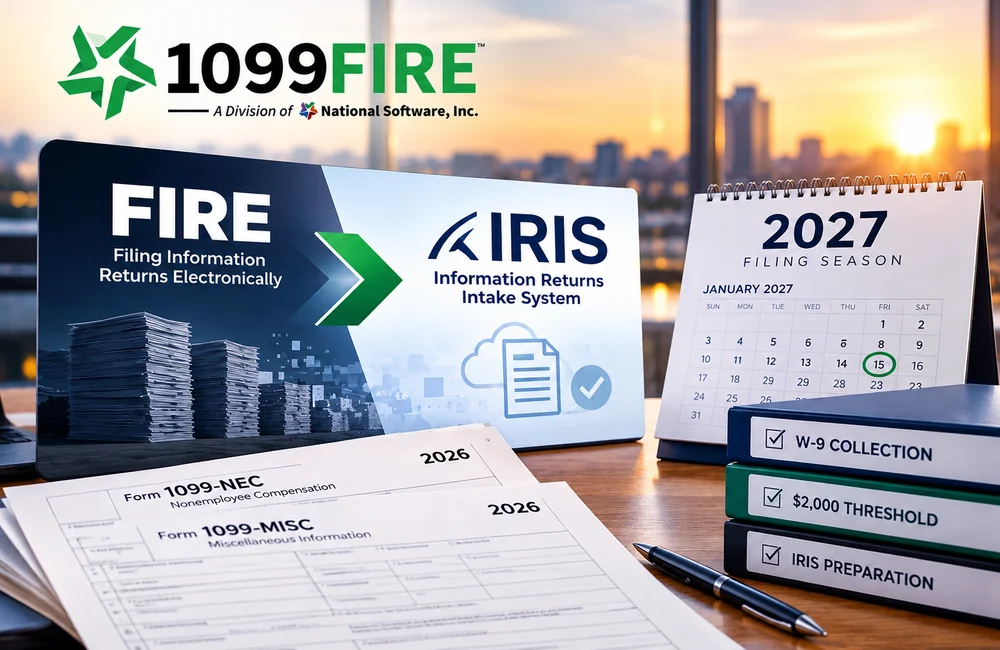
2026 Form 1099 Filing Changes: What Businesses Need to Know Before 2027
The 2026 1099 filing changes: FIRE retirement, the move to IRIS, the new $2,000 threshold and how to prepare for the 2027 filing season.
1099-NEC Threshold 2026: Why $600 Became $2,000
The 1099-NEC threshold for 2026 is $2,000, up from $600. The One Big Beautiful Bill Act (Public Law 119-21), signed in July 2025, made the
IRS 1099-K Threshold Reinstated
Form 1099-K is issued by third-party settlement organizations and payment processors (such as PayPal, Venmo, Stripe, or marketplaces) to report payments made for goods or

IRS Confirms No Federal Form or Withholding Changes for 2025 Under One Big Beautiful Bill Act (OBBBA)
The IRS has announced that for the 2025 tax year, there will be no modifications to major federal tax forms or income tax withholding tables.
Related Reporting Guides
When an update affects a specific filing area, use our topic guides for deeper practical guidance.
1099 Forms & Reporting
For form selection, payer requirements, recipient reporting, and general 1099 filing guidance:
IRS E-Filing & Transmission Systems
For IRIS, FIRE retirement, A2A, TCCs, AIR, SSA filing systems, and electronic transmission workflows:
Corrections, Deadlines & Penalties
For late filings, corrected returns, filing extensions, IRS notices, and penalty guidance:
State Filing & Compliance
For state-specific information-return requirements, direct filing, CF/SF, withholding, and state deadlines:
Forms, Templates & Filing Tools
Changes to filing requirements may also require updated import templates, preparation tools, reference files, or filing checklists.
Visit our Forms, Templates & Filing Tools library for downloadable resources designed to help businesses prepare information for current-year filing requirements.
Frequently Asked Questions About Information Reporting Changes
How often do information-return requirements change?
Some requirements remain stable for years, while others can change because of new legislation, IRS regulations, revised forms, inflation adjustments, filing-system transitions, or administrative guidance. Businesses should review current-year instructions before each filing season.
What is the 1099 reporting threshold for 2026?
For certain reportable payments made during tax year 2026, the statutory reporting threshold increases from $600 to $2,000. The specific treatment depends on the payment and applicable information-return rules.
Learn About the 2026 1099 Threshold Change →
Is FIRE still available for filing information returns?
FIRE is being retired. Current FIRE users must transition to IRIS for tax year 2026 information returns filed during the 2027 filing season.
Read the FIRE Retirement Guide →
Do changes to federal reporting rules automatically change state requirements?
No. States may maintain separate filing thresholds, direct-filing requirements, withholding rules, deadlines, and reporting programs.
How can businesses stay prepared for annual reporting changes?
Businesses should review current IRS instructions, confirm filing-system requirements, update payroll and accounts-payable data collection, verify filing credentials, and review state obligations before filing season begins.
View Current Information Reporting Updates →
Need Help Preparing for Information Reporting Changes?
Changes to reporting thresholds, IRS forms, electronic filing systems, or filing procedures can require businesses to update both their data-collection processes and year-end filing workflows.
1099FIRE can help organizations prepare and submit information returns, navigate current filing requirements, transition to new IRS filing systems, and address corrections or prior-year reporting issues.